Najaf
One of the great centres of pilgrimage and learning in the Muslim world, gathered around a dome of beaten gold.
A Thousand Years of the Hawza
Najaf grew around a single grave. Pilgrims have come to the shrine of Imam Ali since the ninth century, and the hawza that formed beside it has taught law, logic and theology without a break ever since — in study circles on the floor rather than lecture halls.
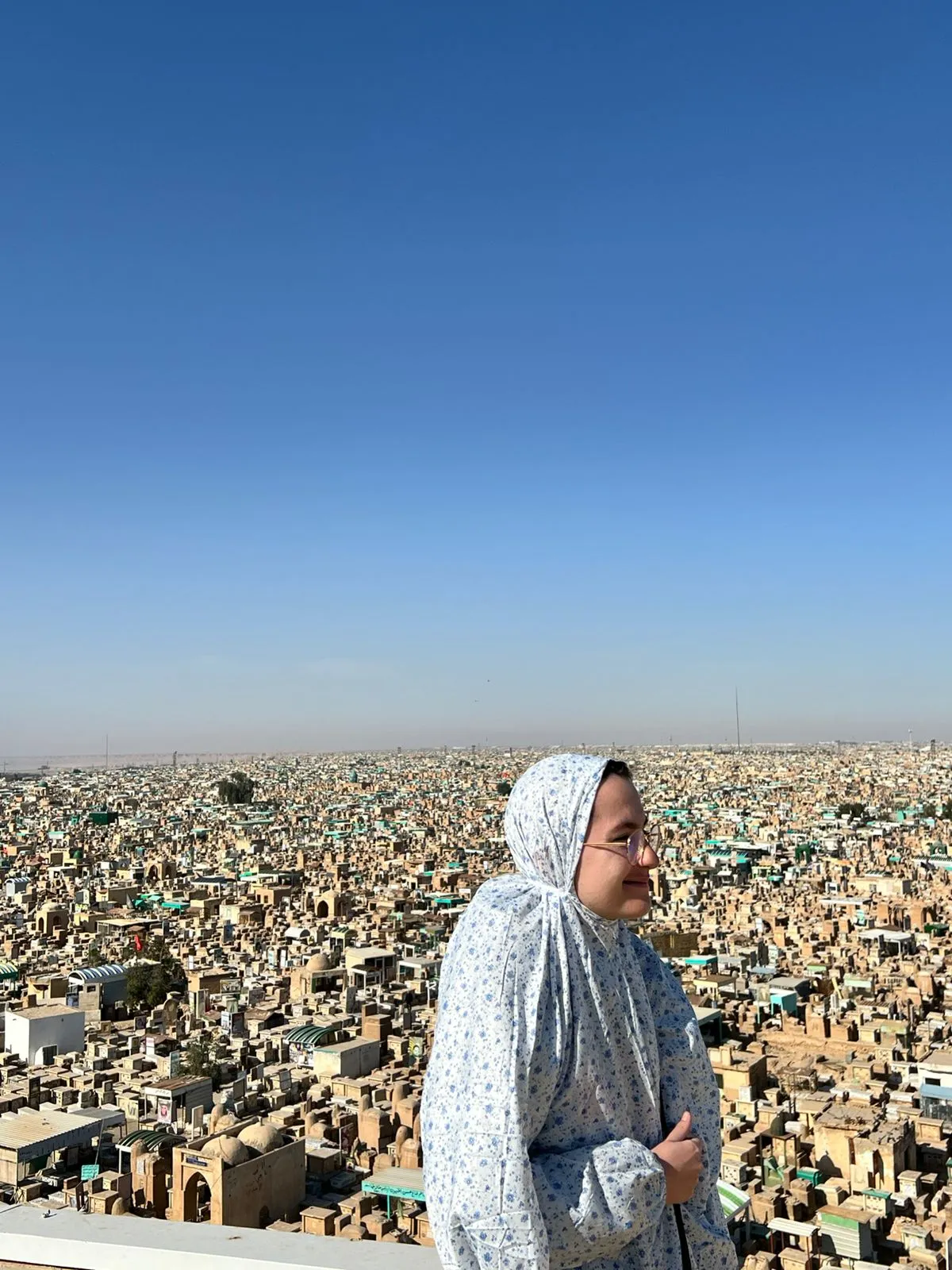
Everything around the shrine is built for arrival: caravanserais turned into guesthouses, streets of booksellers, and Wadi al-Salam spreading west, where the dead have been buried for fourteen centuries in what is now the largest cemetery on Earth.
See the heritage1,400 yearsWadi al-Salam has been in continuous burial use
Visiting the shrine
The courtyards are open to visitors of any faith. A few things are worth knowing before you arrive.
Dress
Modest dress for everyone. Women are lent an abaya at the gate if they need one, and shoes are left at the free deposits by every entrance.
Photography
Phones are generally fine in the courtyard and not inside the tomb chamber. The rule shifts with the season — ask at the gate and follow the attendants.
Timing
Arbaeen, forty days after Ashura, brings millions of walkers through the city. Extraordinary to witness, and close to impossible to book a bed for.
Nearby
Kufa is ten kilometres north. Its great mosque is older than Najaf itself, and far quieter on an ordinary afternoon.
One country, seven thousand years
No single city tells the whole story. Follow the thread onward — through the gallery of destinations, or straight into planning the trip.