Ur
A Sumerian port from the age when the Gulf reached further inland, and a ziggurat whose lowest stage has never fallen.
Where Writing Learned to Count
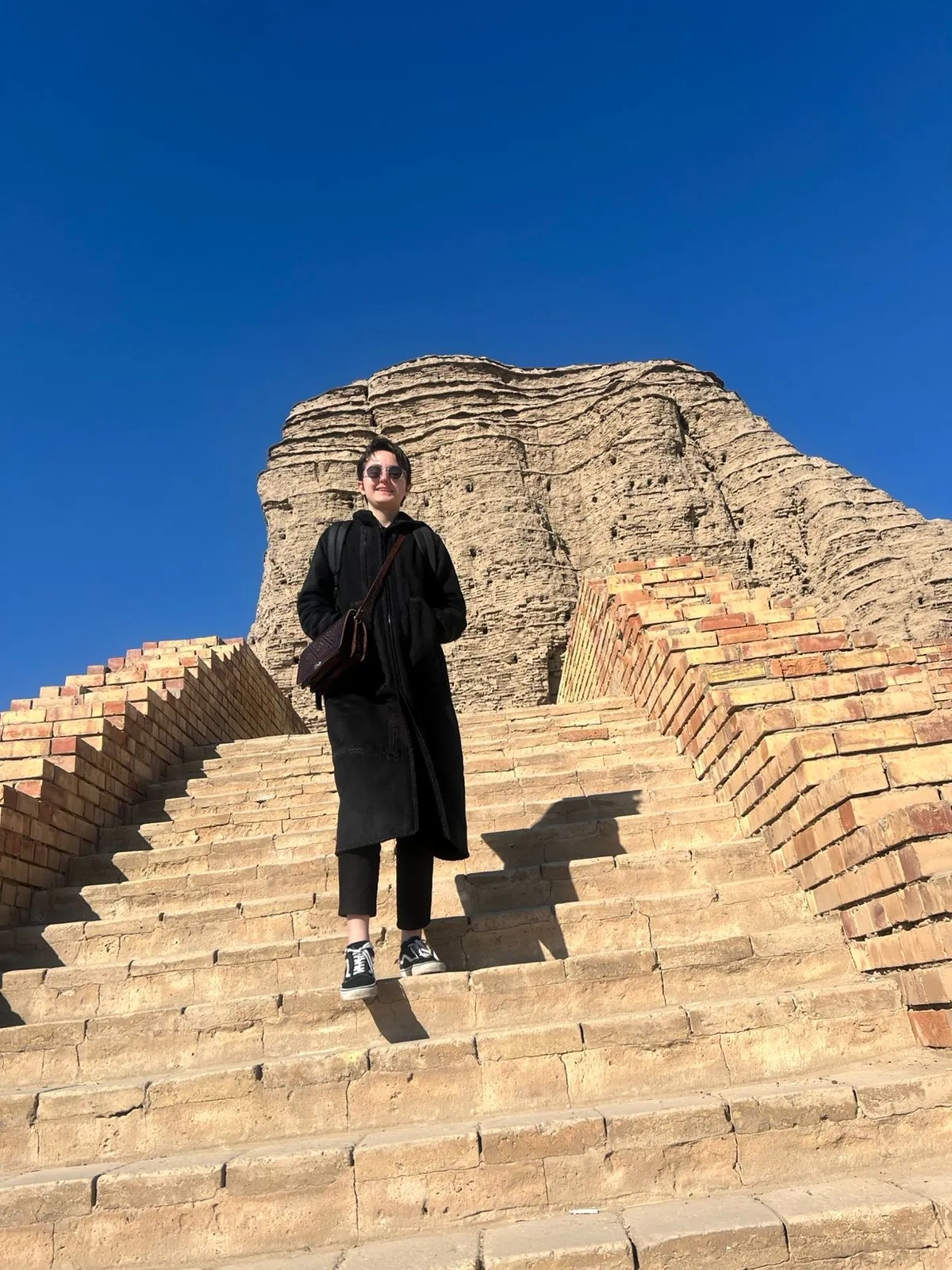
Ur was a harbour on the Euphrates when the water came much closer, and one of the first places anywhere that people wrote things down — receipts first, then contracts, then everything else. The ziggurat was raised by Ur-Nammu around 2100 BC as the platform of the moon god's temple, and enough of it survives that you can still climb the stair.
Woolley's excavations in the 1920s and 30s opened the royal cemetery, and what came out of it — the lyres, the standard, the headdresses of Puabi's court — is now split between London, Philadelphia and Baghdad. Jewish, Christian and Muslim tradition also places Abraham's birthplace here; the house they show visitors sits a short walk from the ziggurat's foot.
See the heritage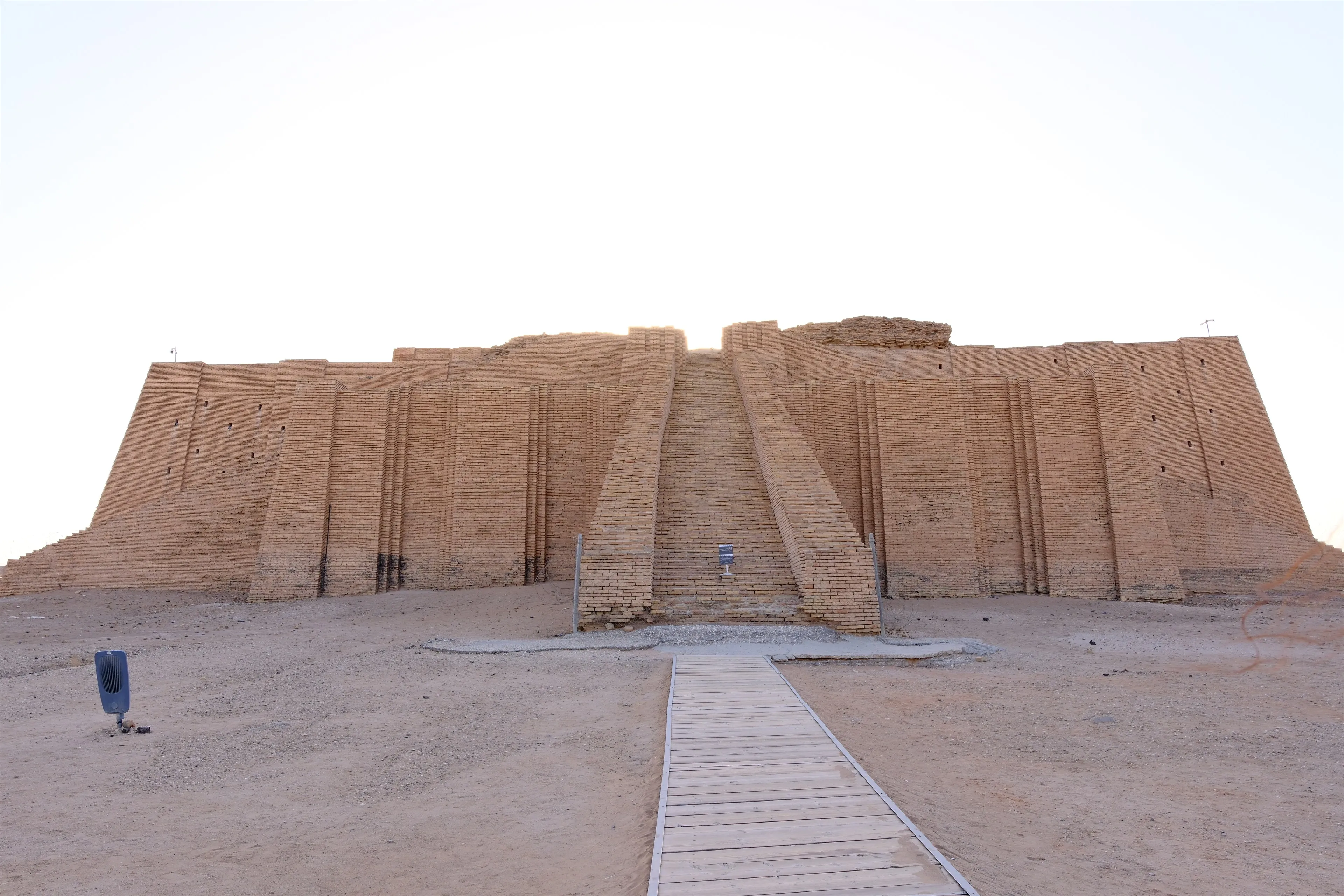
Standing at Ur
A flat, open site in the desert with almost no shade. Go at either end of the day.
Getting there
Fifteen kilometres from Nasiriyah and about four hours from Baghdad by road. Coming up from Basra is shorter.
On the mound
The restored staircases of the ziggurat, the royal cemetery, the moon god's precinct, and the mudbrick lanes of the houses below it.
Where the finds went
The royal tomb objects are in the British Museum, the Penn Museum and the Iraq Museum. What stayed on site is the architecture.
When
November to March. Midday in summer on unshaded brick is punishing, and the low light is better for the terraces anyway.
One country, seven thousand years
No single city tells the whole story. Follow the thread onward — through the gallery of destinations, or straight into planning the trip.