Babylon
The name has carried for four thousand years. The city is ninety minutes south of Baghdad, and you can walk its processional street.
Where the City Was Invented Twice
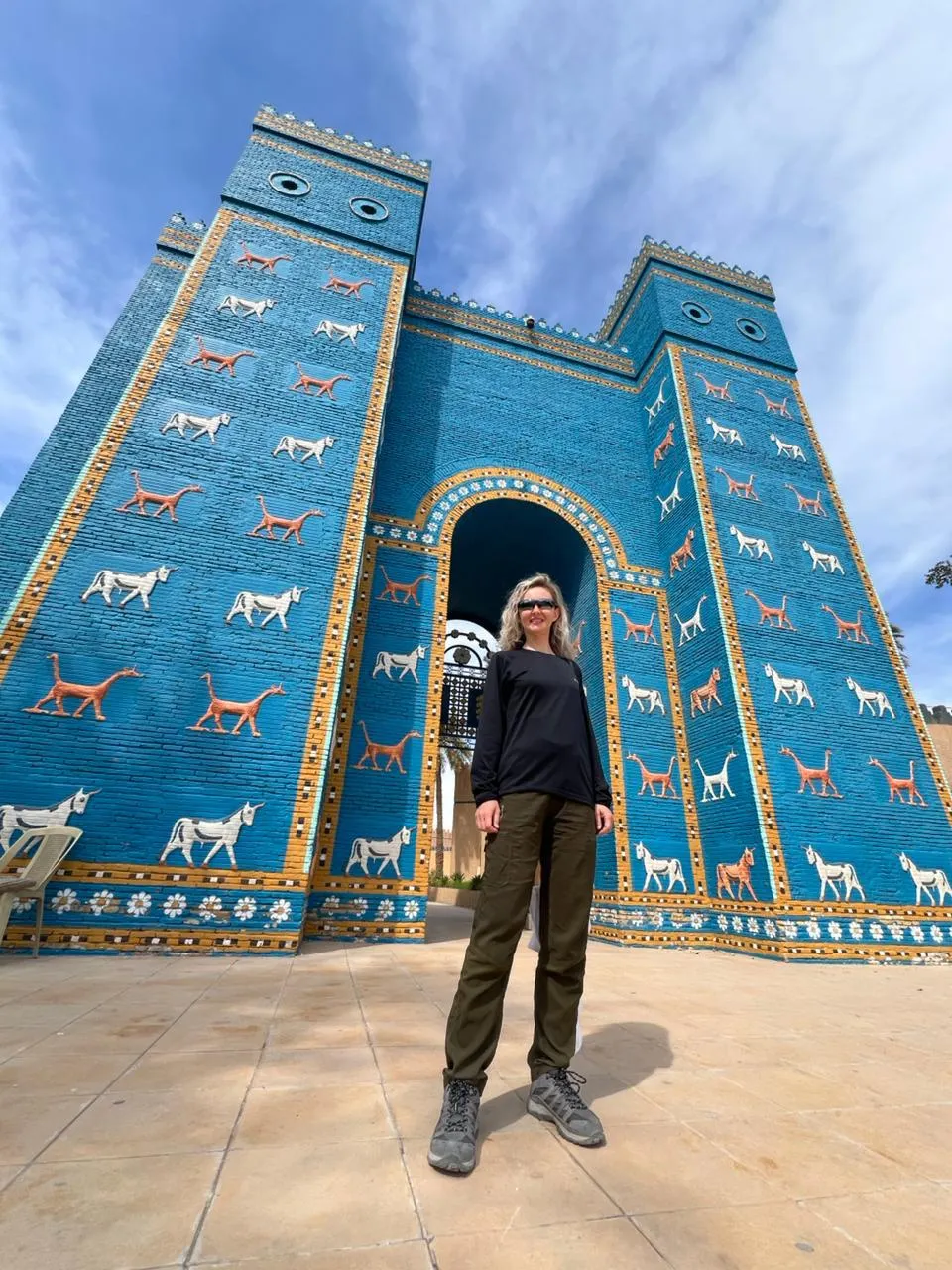
Babylon was already old when Hammurabi made it the capital of an empire in the eighteenth century BC. His laws — 282 of them, cut into a black stone pillar that now stands in the Louvre — are much of the reason the name still means the beginning of things. Twelve centuries later Nebuchadnezzar rebuilt the city in glazed blue brick, with a processional way running north to the Ishtar Gate.
What stands today is layered. Ancient foundations, the mudbrick core of the walls, a 1980s reconstruction raised directly on top of them and stamped with the name of the ruler who ordered it, and a modern replica of the gate — while the finest original panels have been in Berlin since the early 1900s. Read it as a record of how each age has handled the one before, and the site becomes far more interesting than a ruin.
See the heritage2019Inscribed on the UNESCO World Heritage List
Reading the site
Babylon rewards a little preparation. Four things worth knowing before you walk in.
Getting there
Ninety minutes south of Baghdad on the edge of Hillah. Straightforward as a day trip, and often paired with Kufa or Najaf.
What is original
The lower brick courses are ancient. The crisp walls above them are the 1980s rebuild — a distinction the site does not always make for you.
What left
Hammurabi's stele is in Paris and the best of the Ishtar Gate is in Berlin. The Iraq Museum in Baghdad holds much of what stayed in the country.
On the ground
The Lion of Babylon, the processional way, the Greek theatre, and the palace on the ridge above the site, empty and open to the wind.
One country, seven thousand years
No single city tells the whole story. Follow the thread onward — through the gallery of destinations, or straight into planning the trip.