Samarra
For fifty-six years the caliphate ruled the Islamic world from here — and then left, taking the court with it and leaving the city where it stood.
The Spiral and the Great Mosque
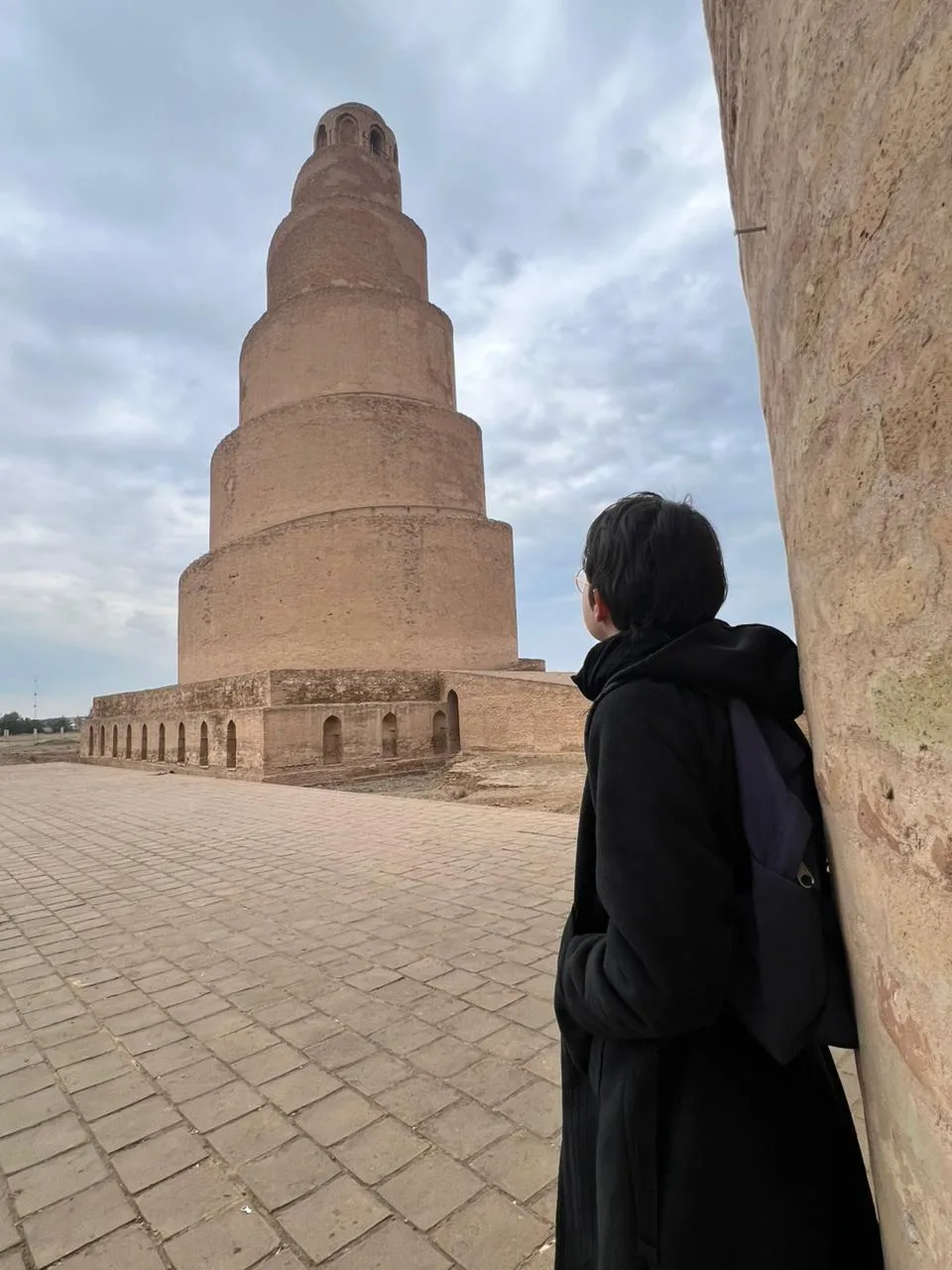
Al-Mu'tasim moved the court out of Baghdad in 836 and laid out a new capital along thirty-five kilometres of the Tigris. The mosque his successor finished here was the largest in the world at the time, and the Malwiya — the minaret that climbs it from the outside in five turning tiers — is the piece everyone recognises.
The court went back to Baghdad in 892, and almost nothing was built over what it left. That is what makes Samarra unusual: not a monument but a whole city plan, with palaces, racecourses, canal lines and street grids still legible on the ground and from the air.
See the heritage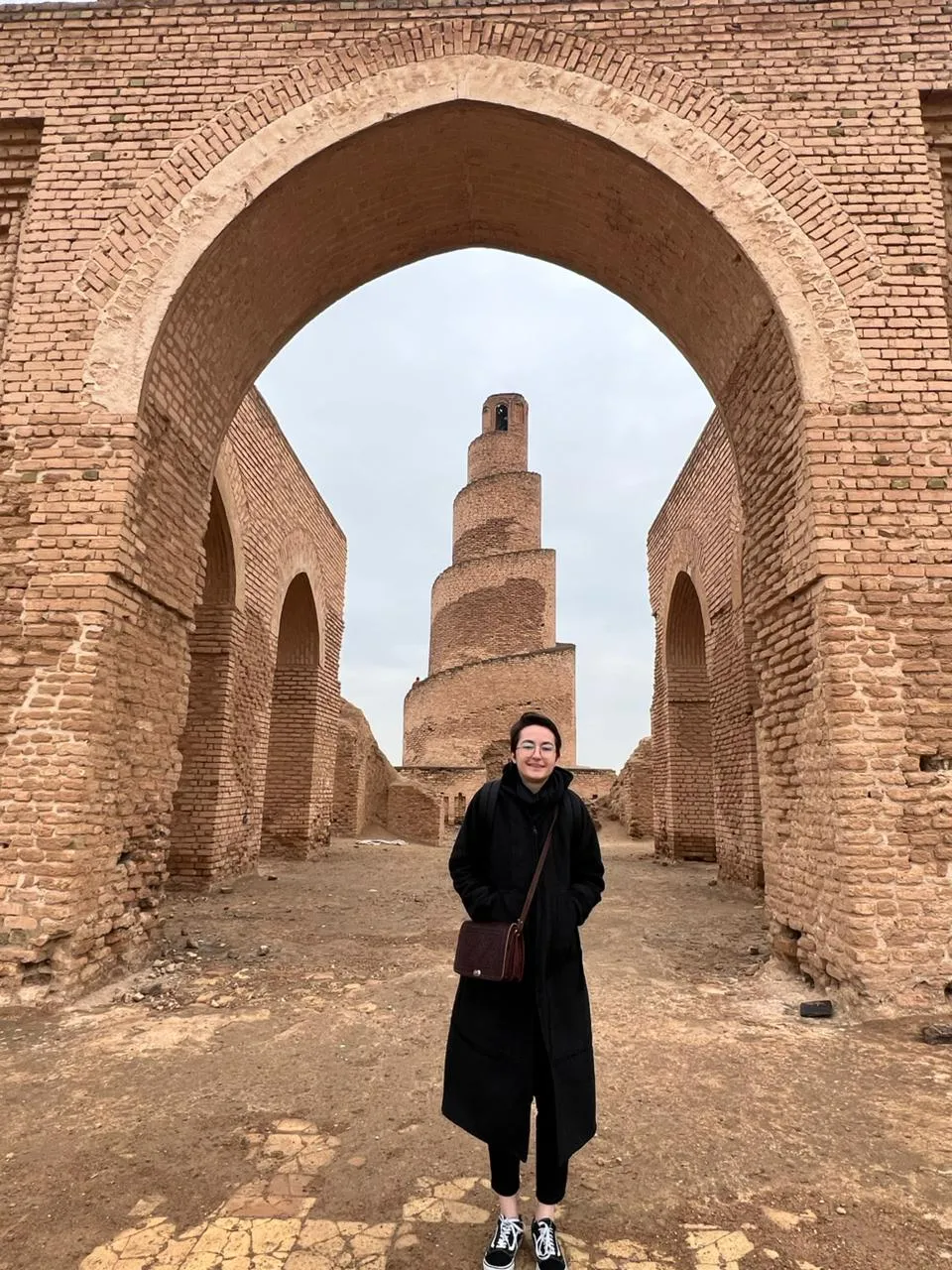
Seeing Samarra
The site is large, flat and mostly open ground. Plan it as a day out of Baghdad.
Getting there
About 125 km north of Baghdad on the Tigris — roughly two hours by road, and normally done as a day trip with a driver.
What survives
The Great Mosque enclosure and the Malwiya, the second spiral at Abu Dulaf to the north, and the palace ruins of Qasr al-Ashiq and Balkuwara.
The Askari shrine
The golden-domed shrine of the tenth and eleventh Imams stands in the modern town, rebuilt after the 2006 bombing.
Access
Checkpoints are part of the road here, permissions change, and the ramp up the Malwiya is not always open. Confirm on the day.
One country, seven thousand years
No single city tells the whole story. Follow the thread onward — through the gallery of destinations, or straight into planning the trip.